
Parham Ghalamdar & Dr Lone Sorensen
Faces and Threads Exhibition
Guest starring the community of Beeston & Hunslet
Opening Night
Tuesday 1st September | 5:30-6:30pm
-
Wednesday 2nd September | 12-8pm
Thursday 3rd September | 10am-2pm
Saturday 5th September | 10am-2pm
Wednesday 9th September | 12-8pm
Thursday 10th September | 10am-2pm
Saturday 12th September | 10am-2pm
Wednesday 16th September | 12-8pm
Thursday 17th September | 10am-2pm
Saturday 19th September | 10am-2pm
Wednesday 23rd September | 12-8pm
Thursday 24th September | 10am-2pm
Saturday 26th September | 10am-2pm
Wednesday 30th September | 12-8pm
Thursday 1st October | 10am-2pm
Saturday 3rd October | 10am-2pm
Sunday 4th October | 10am-2pm -
Parham Ghalamdar is an Iranian-born artist based in the North of England, working across painting, ceramics, AI moving image, installation, writing and performance. His practice asks how images behave under the pressures of exile, war, climate collapse, technological distortion and political violence. Recent projects include Aerotheology (2026) at Leeds Arts University and The Sight Is a Wound (2025), an experimental short film that has received 50+ international screenings and honours, including the Honorary Award for Efforts in Social Filmmaking at Activists Without Borders Film Festival in Reading, UK. Ghalamdar is a 2026/27 Artistic Research Fellow at the Folger Shakespeare Library in Washington, DC, recipient of an Arts Council England Project Grant (2026-2027), and is publishing with postpostpost Vol. II. His work is held in public collections including the Government Art Collection, University of Salford Art Collection, and Leeds Arts University.
-
Lone Sorensen is a painter and Associate Professor of Political Communication at the University of Leeds. Her paintings attempt to reach what academic research cannot – the felt, emotional dimension of our unravelling democratic present and the slippery place of truth within it. A recurring concern is the obstruction of climate action and the opacity of the power behind it.
Her portraits depict political leaders and influencers caught at flashpoints – moments when democracy is invoked, remoulded, discarded, then worn again as protective plumage. Lately the mask is slipping. Working in oil and heavy, near-sculptural impasto, she treats the face as flesh: power made visceral, performed and beginning to decay. Grounded in more than a decade of research into populism and digital media, the portraits ask not what these figures hide but how they render truth impossible to grasp – and how that shifts the ground, democratic and ecological, beneath us.
The question of truth grounds her broader work too: who gets to speak it, and what happens to it as it travels through our media ecology.
Selected publications:
Sorensen, L and Krämer, B. 2024. ‘The shift to authenticity: a framework for analysis of political truth claims’. Communication Theory. https://doi.org/10.1093/ct/qtae013
Coleman, S and Sorensen, L (eds). 2023. Handbook of Digital Politics. Edward Elgar. https://www.e-elgar.com/shop/gbp/handbook-of-digital-politics-9781800377578.html
Sorensen, L. 2023. ‘Populist disruption and the fourth age of political communication’. European Journal of Communication. https://doi.org/10.1177/02673231231184702
Sorensen, L. 2021. Populist Communication: Ideology, Performance, Mediation. Palgrave.
Sorensen, L. 2020. ‘Disrupting democracy: Democratization conflicts as performative struggles’. Media, War & Conflict, 13:1, pp. 8-26
-
Faces and Threads asks a simple question: who gets to shape the stories we hear about the climate crisis?
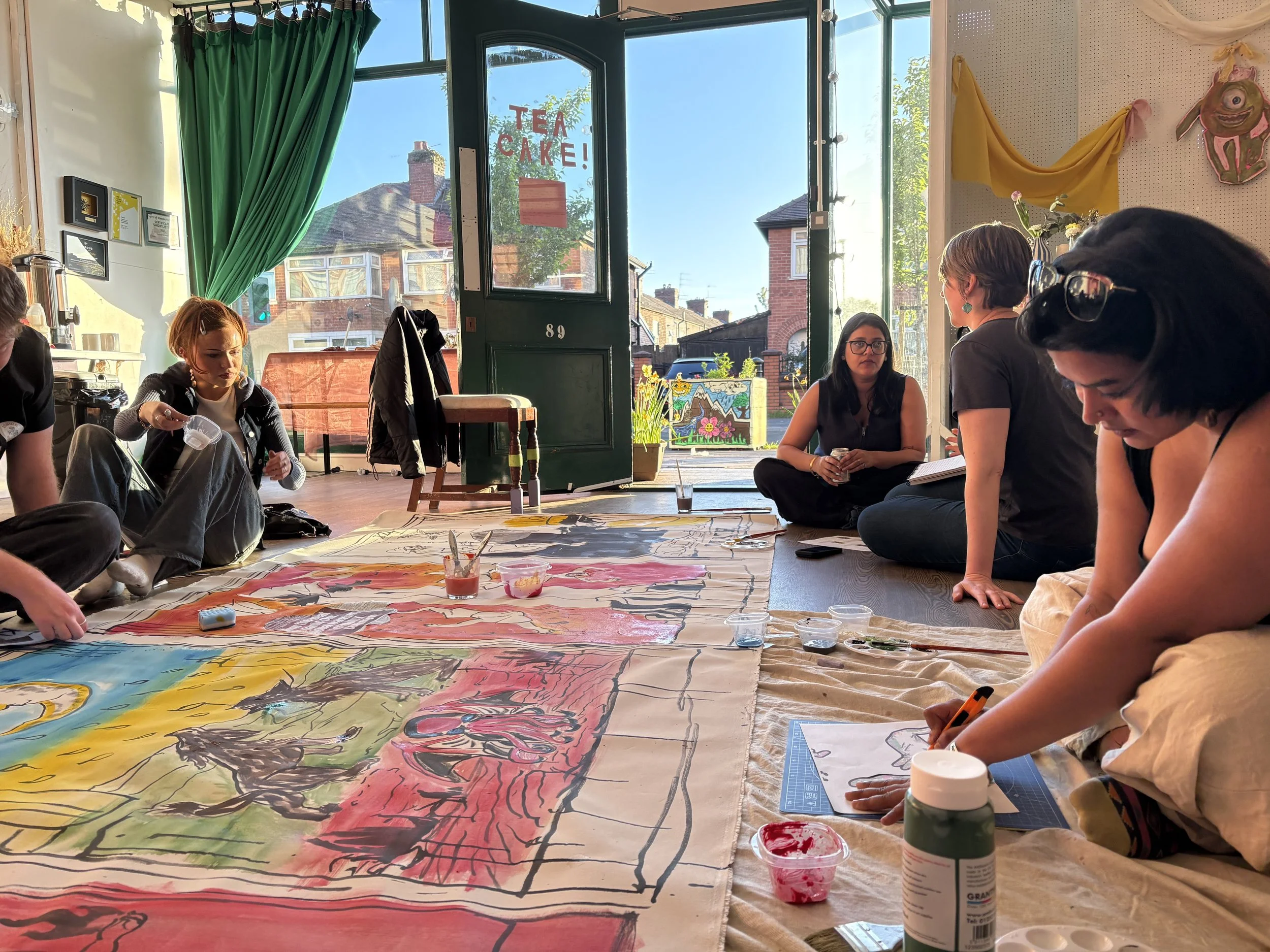
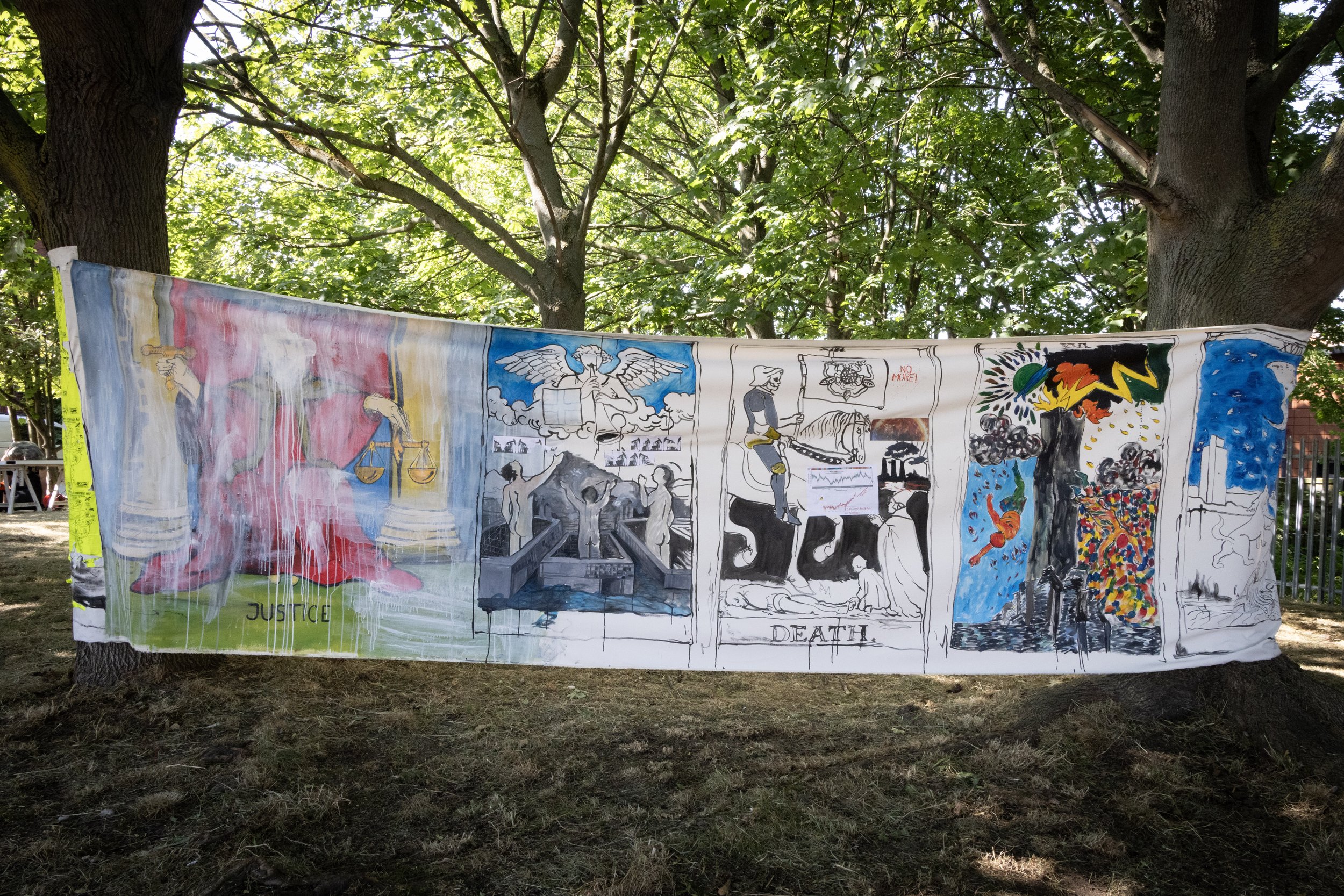
The exhibition brings together three bodies of work: portraits by Lone Sorensen, ceramics by Parham Ghalamdar, and large paintings made with residents of Beeston in Leeds and Longsight in Manchester.
Sorensen’s paintings depict politicians, broadcasters and online personalities whose faces circulate constantly through television, social media and political campaigns. Built from thick, heavy layers of oil paint, familiar faces become unstable, swollen and almost sculptural, while their eyes remain sharply observed. Beginning with images their subjects have already placed into circulation, the paintings ask how political power is performed and how confidence, repetition and visibility can begin to shape what appears truthful.
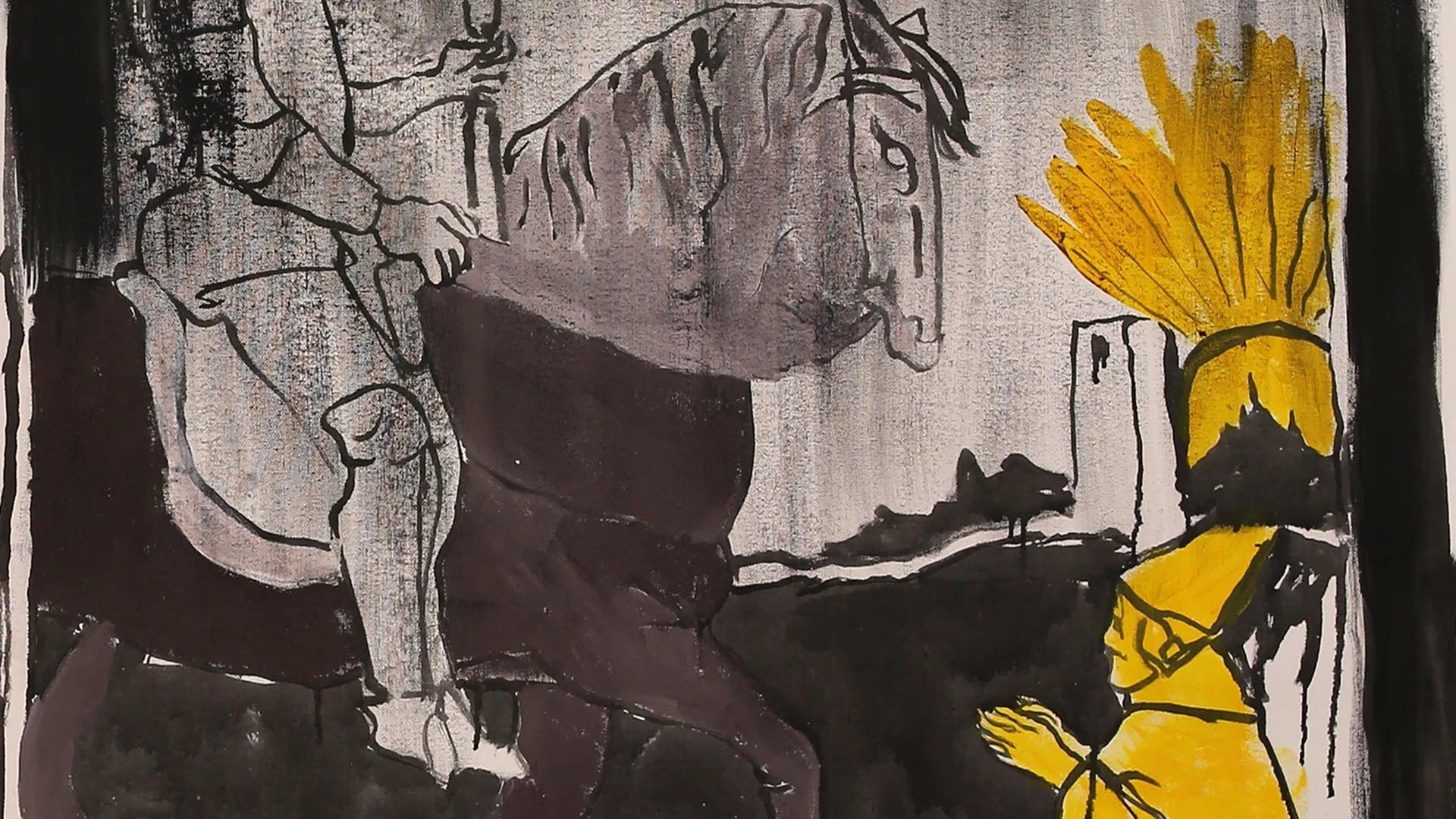
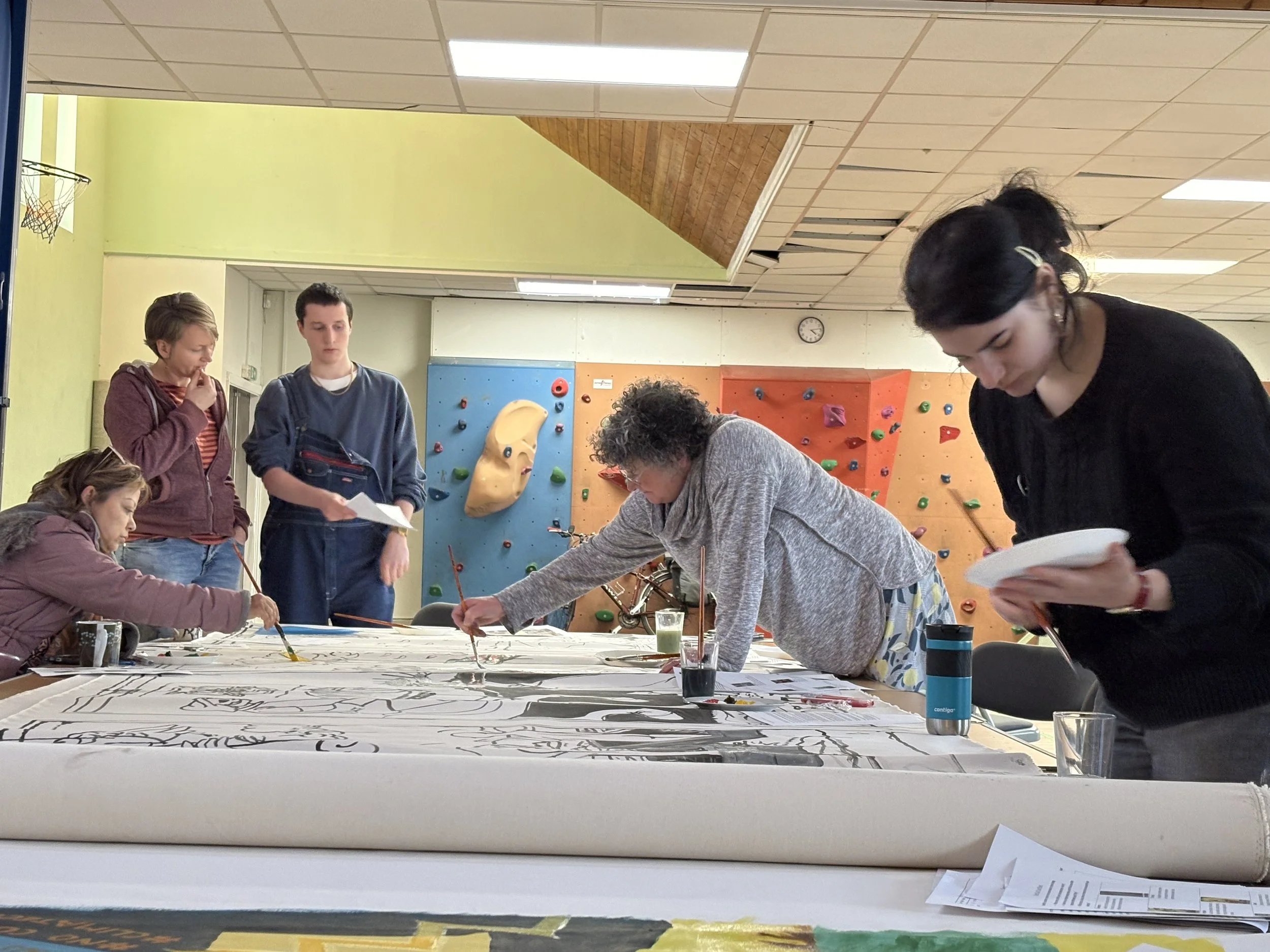
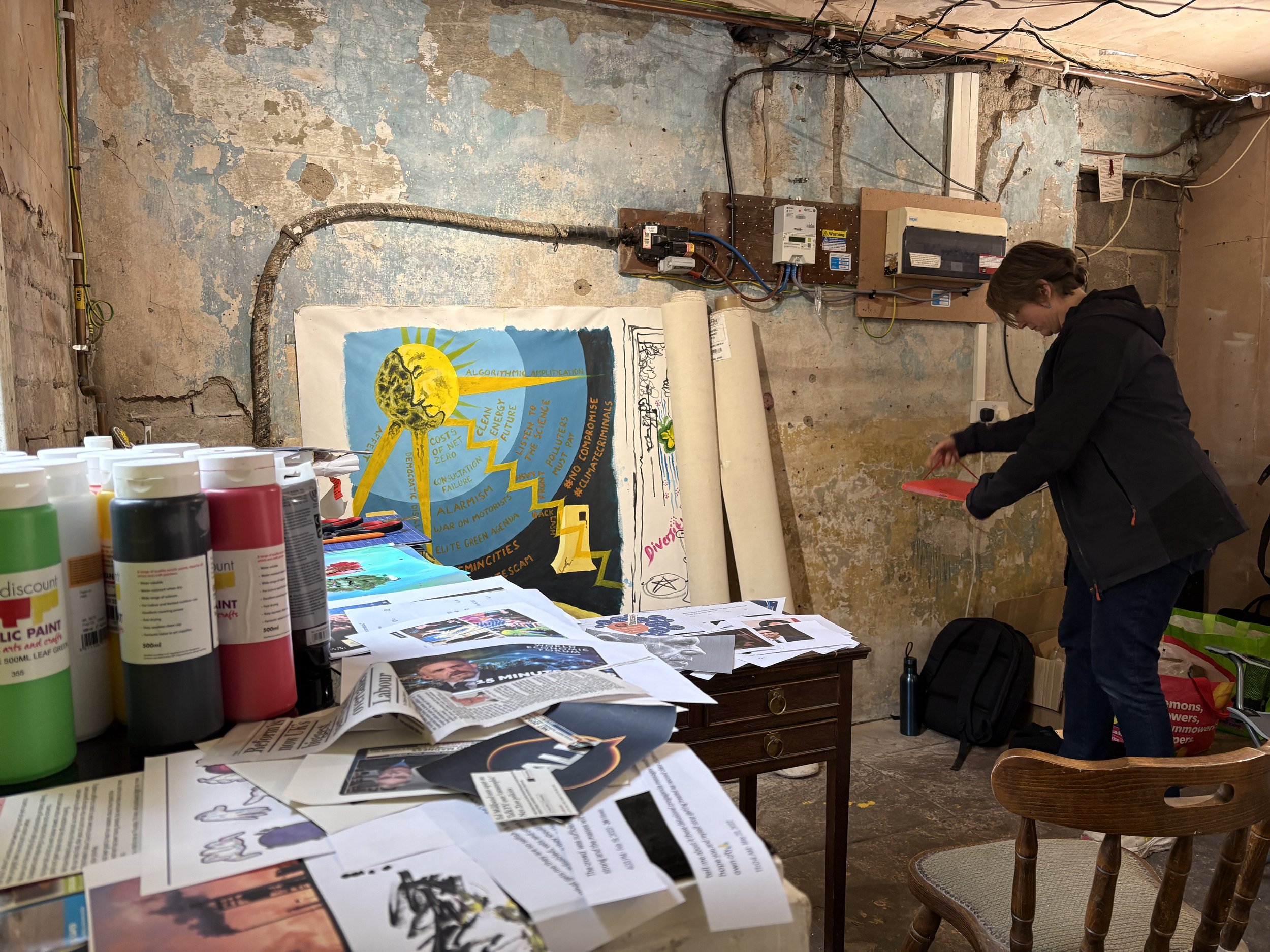
The community paintings were made during workshops responding to social-media posts and public figures connected to climate change. Participants used Tarot cards to discuss what new patterns and archetypes are being repeated and rewarded online. The works were later damaged while shown outdoors in Beeston, then repaired and added to, leaving that history visible.
Ghalamdar’s ceramics resemble vessels contaminated by petroleum. Black glaze spreads like oil or tar, while blue suggests water trapped within a polluted landscape. Objects associated with sustaining life appear poisoned by the material driving climate breakdown.
Together, the works ask who is heard, what shapes belief, and what remains when political, social and environmental systems begin to break down.